Showing posts with label Appreciative I-Messages. Show all posts

Oct 18, 2012

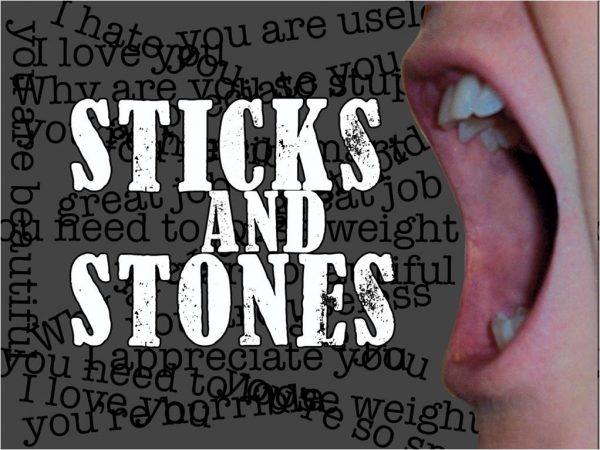
Three Outcomes to What Happens When Parents Use Hurtful Words


We've all heard the (very old) familiar saying about sticks and stones breaking bones, but words not hurting us, right? I'm guessing that this phrase was coined somewhere around the same time that the idea of the world being flat was a logical theory. How archaic and grossly wrong they both were! 
Another age-old theory is the idea that children should be verbally "put in their place," insulted, criticized, blamed, yelled at or scolded in order to achieve one of the following:


  • Teach them learn a lesson
  • Change their behavior
  • Prevent them from doing something wrong
The underlying idea here is: say something harsh = get something done. They're just words, right? No harm done? But let's take a look at what happens when you resort to this method...


Outcome Number 1: Defensiveness. Beyond the fact that children aren't typically perceptive to "negative" comments about themselves, people (of all ages) just don't like being told that they are a different person than they like to perceive themselves as. In order to protect one's own self image and self esteem, our natural instinct is to defend ourselves! The loss of self-esteem over time as a result of the cruel words of parents is one of the biggest tragedies that a parent can be responsible for. The following possibilities after this only grow worse.

Outcome Number 2: Feigned acceptance. In order to avoid conflict, many personality types would rather just pretend that they are getting the message, submit or agree to something on the outside, while what they are really doing is "faking it" in order to end the conflict as quickly as possible. This type of response can be seen quite often when children act differently when their parents are around versus when they aren't. How effective is this really, if their behavior varies from situation to situation?

Outcome Number 3: Rebellion. Being ordered what to do only works for so long, if at all! Particularly in the teenage years (after many years of being told what to do), children's frustration and resentment tends to take a turning point. It is also during this time in their life when they realize that they are not so reliant on mom and dad to take care of their needs. "Why listen to what they say if I can take care of myself anyway?", is a common attitude. And often, their anger from this type of treatment simply turns into spite and rebellion in its pinnacle.

Keep in mind that the above list is just a short version of the most common responses to scolding and insult.

So then, how do parents express their expectations and frustrations with their children? By using a non-blameful method of communication called I-Messages. For more on I-Messages, check our website, Wikipedia or the Parent Effectiveness Training (P.E.T.) book.

What do you think? Let us know!

by: Selena George, P.E.T. Program Manager

Sep 12, 2012

To All Children, Their Parents Are First Seen As Gods

An excerpt from the P.E.T. book

This "psychological size" differential exists not only because children see their parents as bigger and stonger, but also as more knowledgeable, more competent. To the young child there seems to be nothing her parents to not know, nothing they cannot do. She marvels at the breadth of their understanding, the accuracy of their predictions, the wisdom of their judgement.

While some of these perceptions may at times be accurate, others are not. Children attribute many traits, characteristics and capabilities to their parents that are not based on reality at all. Few parents know as much as young children think they do. Experience is not always the "best teacher," as the child will later conclude when she becomes an adolescent and an adult and can judge her parents against a broader base of her own experience. And wisdom is not always related to age. Many parents find it difficult to admit, but those who are more honest with themselves recognize how exaggerated are children's evaluations of Mom and Dad.

While the cards are stacked in favor of the parents' far greater psychological size to begin with, many mothers and fathers foster the difference. They deliberately hide their limitations and mistakes in judgement from their children; or they promote myths as "We know what's best for you" or "When you're older you'll realize how right we were."

I've always been intrigued to observe that when parents talk about their own mothers and fathers, they readily see in retrospect their mistakes and limitations; yet they will strongly resist the notion that they are subject to the same kinds of errors of judgement and lack of wisdom in relation to their own children.

-Dr. Thomas Gordon

Aug 22, 2012

They're Not Teaching You I-Messages

Just yesterday we received a phone call from someone who was in the middle of taking an (unmentionable) communication skills course, and called us to ask for clarification on giving the I-Message. This extremely frustrated young man sounded relieved to be finally getting some real help and clarification on how this skill works. As he delicately approached his question, he began by explaining something that was actually very different from what an I-Message really is. Because just as common as the term is used, it is mis-used. Here was yet another example of it's misuse.

He proceeded to ask for reassurance on whether or not he should be following the formula: I feel______ when______ and I would like______ so can we _______.

I politely explained to him that we do not teach that formula and that unfortunately, I could not help him in his search for how to correctly deliver this four-part confrontive statement of sorts. After several more attempts to get me to answer him about this, I began to listen closer to his frustration. He told me that he was desperately trying to get this thing down right and that every time he asked for more questions in the class, he was accused of not doing his homework. Nobody was giving him the proper formula for how to fill in those four blanks and when he tried it at home, it was not working at all like they said it would.

I listened. (And by that I mean, I active listened.) After what I believed to be a minor breakthrough on his part, I offered to teach him the original, three-part I-Message by Dr. Thomas Gordon. He asked for examples and I provided them. He wrote down the formula and was pleased. "Finally," he expressed, "this is something that makes much more sense. It's like now I have the right equation to plug into."

I couldn't help but then ask him what this class had taught him about running into resistance after you give someone your I-Message. What were you supposed to do then? His answer was painful. He was advised to repeat himself, act "appropriately" and then tell the other person something along the lines of: "You don't want to talk about this now so let's set up a time when we can talk later."

I can't say I was shocked, but there was some serious head-shaking happening on my end. The poor guy! I could tell how badly he wanted to improve his communication skills and how strongly his desire for help was. To be given a set of tools that didn't work must have been like buying a bicycle without wheels. I wondered aloud: "What are you supposed to do after your second attempt to talk with them and they respond in the same way? Repeat the cycle?"

He sighed. I could hear his shrug right through the phone.

When I explained to him what shifting gears into Active Listening was, it was like a light turned on in his head. Knowing that he had written all this new information down, he sounded eager to continue his research. He thanked me graciously and we ended our conversation.

I hope the rest of the students in that class give us a call!


Apr 18, 2012

Is the PET workshop worth the time and money?

We'll let you decide.

Here's what a few recent P.E.T. graduates have said about it:

"I loved the course. Meike's presentation of the material made it easy to understand and apply immediately. I couldn't imagine parenting without it. I have so many wonderful changes in myself and in my two toddlers that I can't begin to list them all. I am very grateful to have found the course and completed it." 
"Excellent instructor. Very enthusiastic, professional, compassionate, practical and knowledgeable!" 
"Before the course my husband and I were thinking about parent counseling to resolve so many issues. We even considered separating, but this course is helping us to communicate better, not only with our child, but with each other." 
"Love it! It's working. My daughter is happier and communicating her needs more. My listening skills are better. I notice quite a few changes particularly that I am a better communicator. I'm expressing my feelings and needs more effectively." 
"This course gave me so many more tools and ideas to positively express myself and resolve conflicts in a pleasant way" 

- from graduates of P.E.T. Instructor, Meike Lemmens: http://www.parentingclassesoc.com/

To sign up for one of Meike's P.E.T. workshops (in the Los Angeles, CA area), please send an email to family@gordontraining.com for more information.

~ follow P.E.T. on Twitter and Facebook for tips, promos and giveaways ~

Jul 26, 2010

Can Appreciative I-Messages Enhance Relationships?

APPRECIATIVE I-MESSAGES ENHANCE AND STRENGTHEN RELATIONSHIPS

One of the most enriching forms of self-disclosure is the Appreciative I-Message. These are messages that describe parents positive feelings toward their children. Although kids do plenty of things that are problems for parents, they also say and do plenty of things that are a pleasure, often helping a parent in unexpected ways or displaying kindness, maturity, consideration or good humor just when it's needed most. When these behaviors occur, it is appropriate and important for parents to disclose any genuine positive feelings they have about them.

Unfortunately, many parents are only self-disclosing when they are upset with their child's behavior. This is clearly appropriate self-disclosure, but the important point is that parents should disclose both their feelings of unacceptance and acceptance. Appreciative I-Messages that express appreciation, love, enjoyment and affection toward children (spouse, friends and others) can contribute greatly to warmer, closer and more enjoyable relationships. Very young children, with their building self-esteem and desire to be a "helper," seem especially to thrive on Appreciative I-Messages.

Consider the value for you, your children, or others in the following examples of Appreciative I-Messages:

  • "I appreciate your taking my turn making dinner--it gave me time to finish writing some emails."

  • "I really like the story you wrote."

  • "I feel proud of you when I see you stand up for yourself like that."

  • "Honey, I really love you."
It is important that Appreciative I-Messages not be used to manipulate or "shape" a child's behavior. Such ulterior motives invariably come through to the child and make your sincerity suspect. The Appreciative I-Message should be a "no-strings attached" expression of acceptance and acknowledgment.

Even though changing your child should not be the motive, parents who express a lot of positive feelings toward their children are often automatically rewarded with less unacceptable behavior, more trust, mutual respect and cooperation, more affection and caring. Honesty, warmth and affection are highly contagious in families!*

*Excerpt from Dr. Thomas Gordon's F.E.T. Adult Resource Book

May 6, 2010

What Appreciative I-Message Will You Send to Your Mom?

In honor of Mother's Day, let's find ways to show our Mother's that we appreciate them--by sending Appreciative I-Messages!

Appreciative I-Messages

These are I-Messages that describe your positive feelings about another person. Appreciative I-Messages express appreciation, enjoyment, affection and love towards parents, brothers, sisters, friends, grandparents, etc. They can contribute greatly to warmer, closer and more enjoyable relationships.
  • "I appreciate your taking my turn making dinner. It gave me time to finish my homework."
  • "I really like the story you wrote."
  • "Mom (Dad, Grandma, etc.), I love you."*
What Appreciative I-Message will you share with your Mother and/or loved ones? :)

*Excerpt from Dr. Thomas Gordon's F.E.T. Young Adult Resource book