
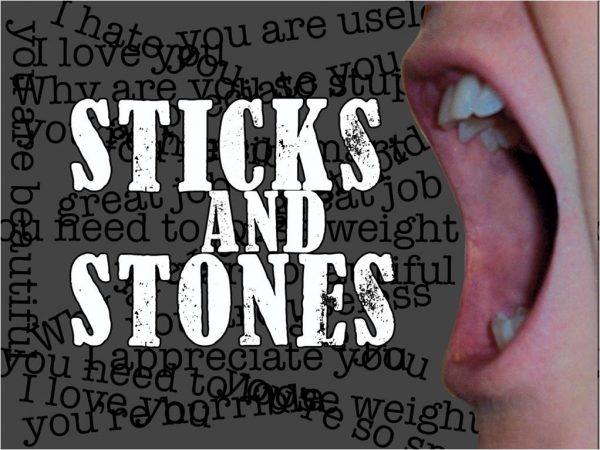
 We've all heard the (very old) familiar saying about sticks and stones breaking bones, but words not hurting us, right? I'm guessing that this phrase was coined somewhere around the same time that the idea of the world being flat was a logical theory. How archaic and grossly wrong they both were!
Another age-old theory is the idea that children should be verbally "put in their place," insulted, criticized, blamed, yelled at or scolded in order to achieve one of the following:
- Teach them learn a lesson
- Change their behavior
- Prevent them from doing something wrong
The underlying idea here is: say something harsh = get something done. They're just words, right? No harm done? But let's take a look at what happens when you resort to this method...
Outcome Number 1: Defensiveness. Beyond the fact that children aren't typically perceptive to "negative" comments about themselves, people (of all ages) just don't like being told that they are a different person than they like to perceive themselves as. In order to protect one's own self image and self esteem, our natural instinct is to defend ourselves! The loss of self-esteem over time as a result of the cruel words of parents is one of the biggest tragedies that a parent can be responsible for. The following possibilities after this only grow worse.
Outcome Number 2: Feigned acceptance. In order to avoid conflict, many personality types would rather just pretend that they are getting the message, submit or agree to something on the outside, while what they are really doing is "faking it" in order to end the conflict as quickly as possible. This type of response can be seen quite often when children act differently when their parents are around versus when they aren't. How effective is this really, if their behavior varies from situation to situation?
Outcome Number 3: Rebellion. Being ordered what to do only works for so long, if at all! Particularly in the teenage years (after many years of being told what to do), children's frustration and resentment tends to take a turning point. It is also during this time in their life when they realize that they are not so reliant on mom and dad to take care of their needs. "Why listen to what they say if I can take care of myself anyway?", is a common attitude. And often, their anger from this type of treatment simply turns into spite and rebellion in its pinnacle.
Keep in mind that the above list is just a short version of the most common responses to scolding and insult.
So then, how do parents express their expectations and frustrations with their children? By using a non-blameful method of communication called I-Messages. For more on I-Messages, check our website, Wikipedia or the Parent Effectiveness Training (P.E.T.) book.
What do you think? Let us know!
by: Selena George, P.E.T. Program Manager

