Showing posts with label blaming. Show all posts

Oct 18, 2012

Three Outcomes to What Happens When Parents Use Hurtful Words


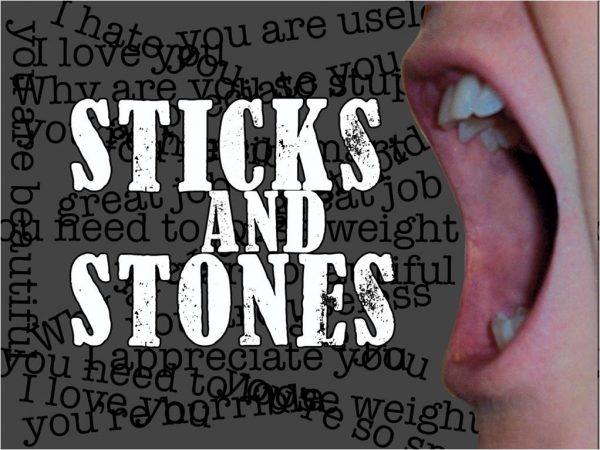
We've all heard the (very old) familiar saying about sticks and stones breaking bones, but words not hurting us, right? I'm guessing that this phrase was coined somewhere around the same time that the idea of the world being flat was a logical theory. How archaic and grossly wrong they both were! 
Another age-old theory is the idea that children should be verbally "put in their place," insulted, criticized, blamed, yelled at or scolded in order to achieve one of the following:


  • Teach them learn a lesson
  • Change their behavior
  • Prevent them from doing something wrong
The underlying idea here is: say something harsh = get something done. They're just words, right? No harm done? But let's take a look at what happens when you resort to this method...


Outcome Number 1: Defensiveness. Beyond the fact that children aren't typically perceptive to "negative" comments about themselves, people (of all ages) just don't like being told that they are a different person than they like to perceive themselves as. In order to protect one's own self image and self esteem, our natural instinct is to defend ourselves! The loss of self-esteem over time as a result of the cruel words of parents is one of the biggest tragedies that a parent can be responsible for. The following possibilities after this only grow worse.

Outcome Number 2: Feigned acceptance. In order to avoid conflict, many personality types would rather just pretend that they are getting the message, submit or agree to something on the outside, while what they are really doing is "faking it" in order to end the conflict as quickly as possible. This type of response can be seen quite often when children act differently when their parents are around versus when they aren't. How effective is this really, if their behavior varies from situation to situation?

Outcome Number 3: Rebellion. Being ordered what to do only works for so long, if at all! Particularly in the teenage years (after many years of being told what to do), children's frustration and resentment tends to take a turning point. It is also during this time in their life when they realize that they are not so reliant on mom and dad to take care of their needs. "Why listen to what they say if I can take care of myself anyway?", is a common attitude. And often, their anger from this type of treatment simply turns into spite and rebellion in its pinnacle.

Keep in mind that the above list is just a short version of the most common responses to scolding and insult.

So then, how do parents express their expectations and frustrations with their children? By using a non-blameful method of communication called I-Messages. For more on I-Messages, check our website, Wikipedia or the Parent Effectiveness Training (P.E.T.) book.

What do you think? Let us know!

by: Selena George, P.E.T. Program Manager

Jun 7, 2012

Do Schools Deny Your Children of Their Civil Rights?

Excerpted from the Chapter "The Other Parents of Your Children" in the Parent Effectiveness Training book, by Dr. Thomas Gordon:

      In most schools, students are blatantly denied civil rights - the right of free speech, the right to wear their hair as they prefer, the right to wear the clothes they like, the right to dissent. Schools also deny children the right to refuse to testify against themselves, and if kids get into trouble, administrators seldom follow the customary procedures of "due process of law" guaranteed to citizens by the judicial system
     Is this a distorted picture of schools? I think not. Many other observers of the school system are seeing the same deficiencies. Furthermore, one need only ask youngsters how they feel about schools and schoolteachers. Many kids say they hate school and that their teachers treat them disrespectfully and unfairly. Most kids come to esperience school as a place where they must go; they experience learning as something that is seldom pleasant or fun; they experience studying as tedious work; and they see their teachers as unfriendly police officers. 
     When children are assigned to adults whose treatment of them producessuch negative reactions, parents cannot be expected to shoulder all the blame for the way their kids turn out. Parents can be blames, yes, but other adults must share the blame.

 How closely do you think this relates to your child's school or learning environment? Let us know your thoughts. Please feel free to comment here or on our Facebook page.

May 16, 2012

Do Kids Really Need to be "Toughened Up" for the Real World?

Some parents believe that their children should be treated with the use of punitive power in order to prepare them for the "real world".

This belief leans toward the idea that in the crass adult world, kids need to be "toughened up" in their childhood in order to survive as grown-ups. Those who belong to this school of thought believe that this tough love should be shown in form of punishment and the use of punitive, parental power. 

Here's why this theory is amiss:

Let's start with the general idea that parents want their children to grow up to become responsible, capable adults. They raise their children to show them the differences between "right and wrong" and the skills needed to fulfill their basic needs. Growing up, children learn a language for communicating with others, how to use numbers, how to drive, etc. Very few of these children take a course that teaches how to communicate effectively with others in order to get their needs met, especially during times of conflict. They learn how to talk with people and how to problem solve by mimicking what their parents do. After all, "modeling" is the most powerful way to teach anyone, anything.

In a world where most of us grow up with the use of punishment and parental superiority, it's no wonder that the "real world" we are planted in is so tough. Imagine millions of crying, whining adults scolding each other, telling each other what to do, striking out in anger and stepping on the heads of others; all of this in attempt to get some need met. The inadequacy of trying to solve problems this way is monumental.

Let's delve deeper into the mind of a child raised this way. What happens to the human psyche when our needs are met with threats, commands, blame, judgement and name-calling (just to name a few)?

These common reactions to children produce a countless number of side-effects. When a child begins to fear a parent, they are also hearing a threat of getting hurt by someone bigger and stronger than they are. While the power might work to modify the child's behavior for the moment, the child will almost ALWAYS fester resentment, which will trigger hostile responses in the future. Alternatively, this may cause a child to become submissive and fearful. 

Parents' use of demanding or ordering their children to do something communicate to the child that the parent does not have faith in the child's own judgement or capability. Patterns like this create reluctance in decision-making and an inability to problem-solve on their own, simply because they haven't been given the chance to practice using their own judgement. The common thought here would be, "I always do it wrong so why try?"

Criticizing and name-calling have some of the worst effects on children. Dr. Thomas Gordon wrote, "A child's self-concept gets shaped by parental judgement and evaluation. As the parent judges the child, so will the child judge himself." Like adults, children will respond with defensiveness even in cases disguised as "constructive criticism." In order to protect their own self image, children can become very hostile in the face of blame, ridicule and disagreement.

Stepping out from behind the microscope, we know how and why punitive parenting causes hostile and apprehensive adults. The failure of many marriages, business partnerships and friendships can be found as a result of "how you were raised" versus "how he/she was raised." It's important to know that the true test of a relationship isn't how many conflicts occur, but rather, how each conflict is handled. Gordon said conflict to be the "true test of a relationship."

When one learns how to deal with their own feelings AND the intense feelings of others, while accomplishing the common goal of each person getting what they need WITHOUT having to compromise, our work here is done.
 By now, you might be wondering: "How can I do that?!" Well, ahem, there are half a dozen books that can explain it all! Check out the work of Dr. Thomas Gordon and Linda Adams here.

And as always, let us know what you think.


written by: Selena George

Mar 23, 2010

Angry much?

Anger
__________________

Unfortunately, often when another person's behavior causes us a problem we get angry and put the blame on them.

Anger is like the tip of an iceberg. It's the part you show to others, but you have other feelings that are more important.

People often "act" mad to cover up those deeper feelings that are hurting them. Anger is sometimes a feeling people have after they have had an earlier feelings.

They don't want to seem soft, vulnerable, or weak so they often act phony. They don't show their true feelings.

They say things like:

"You're not being fair."
"You're a big (swear word.)"
"This is all your fault."
"If you hadn't acted like such a jerk, this wouldn't have happened."

An angry message usually makes the other person feel put down, blamed, guilty, etc. When people hear angry statements like these, they get defensive and want to strike back. Such angry messages can really damage relationships.

Such angry statements are often "You-Messages" because they focus on the other person and usually contain "You." They blame the other person.

Below the surface of the water and under the anger, are feelings like hurt, fear, rejection, jealousy, loneliness, worry, etc.

Here's an example:

You're crossing the street and have the right of way; a car runs a red light and narrowly misses hitting you head-on. What would you actually be feeling first? (fear?)

A minute later, the driver pulls into a gas station and you spot the car. What might you be feeling then? (anger?)

Think about the last time you were angry at someone. Were there any other feelings--just before or just after feeling angry?*

*Excerpt from Dr. Thomas Gordon's Family Effectiveness Training (F.E.T.) Young Adult Resource book


Jul 15, 2009

Blaming Others, Tattling, Cheating

In families with more than one child, the children are obviously competing to get parental rewards and avoid punishment. They soon learn another coping mechanism: put the others at a disadvantage, discredit the other children, make them look bad, tattle, shift the blame. This formula is simple--"By making the other guy look bad, maybe I will look good." How defeating for parents; they want cooperative behavior from their kids, but by using rewards and punishment they breed competitive behavior--sibling rivalry, fighting, ratting on brother or sister:

"She got more ice cream than I did."
"How come I have to work int he yard when Joe doesn't?"
"He hit me first--he started it all."
"You never punished Ericka when she was my age and did the same things I'm doing now."
"How come you let Eddie get by with everything?"

Much of the competitive bickering and mutual blaming among children can be attributed to the parents' use of rewards and punishment in child-rearing. Since no one has the time, temperament, or wisdom to dispense rewards or punishments fairly and equally at all times, parents are inevitably going to create competition. It is only natural that each child wants to get most of the rewards and see her brothers and sisters get most of the punishment.