Showing posts with label kids. Show all posts

Feb 24, 2014

What This Child Wished For

One of our Parent Effectiveness Training (P.E.T.) Instructors in Australia shared a heart-warming note to Santa written by her 11-year-old daughter, Aithne. 

If only all parents could read this one...


Dec 11, 2013

Christmas Gifts You Wish They Hadn't Gotten

The ugly Bill Cosby sweater, the delicious fruit cake, the...gulp...Crocs! You know where I'm going with this - Every year, poor suckers everywhere become the reluctant recipients of such undesirable gifts. You don't quite know how to handle it, but the "put-a-smile-on-your-face-and-say-thank-you" voice in your head always chimes in. Maybe it's the hesitancy of shattering the look of excitement on your mother-in-law's face, or perhaps it's the guilt of seeming ungrateful, but one thing is for sure: we've all had our turn playing the part of the begrudgingly thankful beneficiary.

Such is the case with *certain* gifts that will inevitably be given to your children as well. Not the kangaroo underwear and socks combo from grandma (which is a whole other story), but the ones that you as the parent really wish your children hadn't received. Perhaps yours is the household that is overflowing with miniature toy cars and couldn't possibly make room for another. Or maybe you've been careful about what kinds of video games your children play with. In any case, most parents have at least one dreaded item on their "Please Don't Get This For My Kid" list.

But how do you tastefully tell someone what not to get your children? It seems so uncomfortable, so awkward...

Of course the best way to solve a problem is to prevent it from occurring in the first place. The Preventive I-Message is a tool used to communicate information and emotions in hopes to prevent a problem from happening in the future. Like all I-Messages, it should have three parts: (1) the behavior, (2) the feeling and (3) the effect. Letting people know all three components is critical, as it is the most effective way to let someone know exactly where you're coming from - and even - put them in your shoes.

Here's what it might look like:
We're nervous about Wyatt getting any more cars for Christmas because he already has so many that we can hardly keep up with the mess it creates when he plays with them. 
- or- 
Since he is so impressionable right now, we're worried that if Lucas gets that video game, we might have more issues at the playground if he tries to imitate the violence he sees from it. 
By communicating in this way, you're letting others in on some useful information about what is or isn't okay with you, which they may not have otherwise known. (And the same rule applies when you want to avoid being the recipient of a pair of monogrammed granny panties. We know, the ones from your birthday are gonna last you for years to come!)

Still, some people will be simply determined to get your kids what they want regardless of what you tell them and this won't always solve every instance of receiving unwanted gifts. But as Dr. Gordon wrote, "A Preventive I-Message in time might save nine [out of ten] confrontations."

This holiday season, give yourselves and your loved ones the gift of solving the problem before it happens. You may very well end up with one less item to add to the donation pile. We'll keep our fingers crossed for you. ;)

by: Selena George at Gordon Training International 

Jul 31, 2013

Learning to Loosen the Apron Strings


My nephew is three years old and full of insatiable curiosity, as all children his age seem to be. Most members of my family imagine that watching him for an evening is not for the weak at heart, but personally, I jump at the opportunity to take care of him while my sister is away. He turns on and off the faucet to just to watch the water disappear through the drain. He walks through bushes and shrubs just to figure out if he can do it or not. If he bruises himself in the process of one of his experiments, I know it isn't something that he's going to do again. But if he is entertained and amused by the outcome of the enchanting physics of the world, then it's probably going to be something he will want to repeat ad nauseum. This is simply the essence of the inquisitive and absorptive mind of a young child. Which makes it all the more painful to watch when I witness my sister put a shrieking halt to a majority of his elementary investigations.

A hefty part of the idea here is understanding that not all behaviors of our children have a tangible and direct effect on you as a parent. Your daughter might get her hands a little dirty, her shirt a little stained or her socks a little wet (you get where I'm going with this) but stepping aside and realizing that no real harm is being done to them or you is the first step in understanding that you don't really have to say no to everything that they attempt to do. Upon this realization, you might even find that fewer and fewer behaviors become unacceptable to you (recall the "Behavior Window" from the P.E.T. book). 

Whatever it is that gets you to a place of broader acceptance and greater awareness of the intentions behind many of your child's behaviors will ultimately create a fertile context for them to learn and grow.

But here's why this one's hard:

Parents get caught up on the idea that their child might get hurt or experience some form of discomfort by participating in certain activities. It's true that there is some risk involved in almost everything, especially with the life-experience and stature of a child. Let me clarify one important idea here.

In the face of clear and apparent danger, the answer is always and without question, to do whatever means necessary in order to stop your child from serious harm. Yes, that might mean the use of your parental power. However, when it comes to the proverbial spilled milk that we as adults steer away from, the most powerful way to teach and influence your child is to first model your own behavior and then give them the opportunity to try it for themselves.

As they get older, the inevitable trials of life begin to get more and more complex. Getting a bad grade in school or resolving a conflict with a friend are two of the most common things that parents want to step in on and help their child through. Or shall we say, solve for them? While you might be jumping at the chance to provide your wisdom and assistance during times like these, you might actually be doing more harm than good. 

When asked for, advice can be helpful at times. But when your child is walking straight through a thorny bush for the first time (just as you did at their age), stop yourself and consider what lesson might be unfolding before you decide to step in and stop them. You just might be surprised with what it is they're learning. 

By: Selena C. George, Program Manager

Mar 18, 2013

P.E.T. Tip of the Month

For your I-Messages to be effective, you often need to spend more time active listening to the other person’s responses than you spend giving your I-Message.

Remember the Gear-Shifting diagram (page 60 in the P.E.T. workbook)?

A clear I-Message is a powerful tool. You get to think seriously about your needs and stand up for yourself with clarity and confidence. No blaming, directing or otherwise roadblocking the other person, so you’re also strengthening your relationship with him. You expect to get a quick positive result.

And sometimes you do. What often happens, though, is that the other person instead starts to defend himself. It can feel as if you haven’t given an I-Message at all. The temptation then is for you to defend yourself—or, at the very least, to try to drive your I-Message home. Instead, now is a good time to take a discrete deep breath.

Most people are expecting to be dismissed or controlled when there is a problem. Until their point of view and feelings about it have been thoroughly listened to and accepted, they can’t experience the profound respect of your I-Message.So you need to active listen until they relax a bit, restate your I-Message as clearly and briefly as you can, then active listen again. Once the other person experiences that you:

1. Sincerely accept his position and its importance to him;

2. Are not trying to change his mind;

3. Are simply expressing your conflicting need, and

4. Trust him to come up with an effective solution, or to work one out with you that meets both your needs;

...he is much more likely be able to listen to you, and willing to help you out.

In the meantime, best wishes for plenty of happy and effective parenting!

By: Certified P.E.T. Instructor, Catherine Dickerson, M.Ed., LCSW, Registered Play Therapist, License #24454

Catherine's next P.E.T. workshop begins in Solana Beach, CA on April 16th! Email family@gordontraining.com for more details.


Mar 13, 2013

How P.E.T. Helped Our Family Handle An Incident Of Cyberbullying


Cyberbullying is a phenomenon that is unique to this generation and it personally touched my family when my daughter was 10 years old and in the 5th grade.  It is a form of bullying that has evolved due to the rapid onset of our use of electronic technology and the arrival of social media sites in the late 1990's.  According to Internetsaftey.org (http://www.internetsafety.org), "Cyberbullying is willful and repeated harm (i.e., harassing, humiliating, or threatening text or images) inflicted through the Internet, interactive technologies, or mobile phones."  In short, anyone who uses a computer, email, instant messaging, social media sites, mobile phone, or interactive online video games, is using the tools that enable cyberbullying to take place.  As a result there is a high risk of experiencing cyberbullying either as a victim, a bystander, or as the perpetrator.  
This week there has been a Cyberbullying Prevention Act put forward in the state of Maryland in response to a few high profile suicides by young teens who were the victims of cyberbullying.  Cyberbullying has real and serious consequences.  There is some evidence to show that the rates of depression are higher among children who experience cyberbullying versus "traditional" bullying.  In the words of Noah Brocklebank (http://www.huffingtonpost.com/2013/03/12/noah-brocklebank-letters_n_2861140.html) (http://www.youtube.com/watch?v=sR4D4HLzciU&feature=youtu.be), who was a young victim of cyberbullying, "Words have power."  In my opinion there is no better book or course than Dr. Thomas Gordon's Parent Effectiveness Training in order to equip parents, and everyone who interacts with children, with the communication tools ensure that their words have positive and not negative power.

Cyberbullying is a fact of modern life that we all need to take seriously, but especially anyone who interacts with children.  In my daughter's instance, cyberbullying occurred in the first year that she was actively using the internet to socialize with her friends after school via Skype conference calls and Skype instant messaging.  It started as a form of social acceptance and camaraderie.  It quickly and very easily turned into cyberbullying.  Internetsafety.org defines cyberbullying tactics as the following:

  • Gossip: Posting or sending cruel gossip to damage a person’s reputation and relationships with friends, family, and acquaintances  
  • Exclusion: Deliberately excluding someone from an online group
  • Impersonation: Breaking into someone’s e-mail or other online account and sending messages that will cause embarrassment or damage to the person’s reputation and affect his or her relationship with others 
  • Harassment: Repeatedly posting or sending offensive, rude, and insulting messages 
  • Cyberstalking: Posting or sending unwanted or intimidating messages, which may include threats 
  • Flaming: Online fights where scornful and offensive messages are posted on websites, forums, or blogs
  • Outing and Trickery: Tricking someone into revealing secrets or embarrassing information, which is then shared online
  • Cyberthreats: Remarks on the Internet threatening or implying violent behavior, displaying suicidal tendencies

According to The American Academy of Pediatrics, cyberbullying is the “most common online risk for all teens” and girls are more likely to engage in cyberbullying than boys are.  Our children are using these interactive technologies more and more, at younger and younger ages, and they can have access to them in every area of their life.  Although cyberbullying may be a fact of modern life I believe that the skills taught in the P.E.T. course provide a model of communication and parenting that can help turn the tide on cyberbullying in two key ways.

Modeling How to Resolve Conflicts Without the Use of Power

Firstly, the P.E.T. model of communication and parenting is unique because of the fact that it dissects how power is used in relationships and puts forward a model of resolving conflicts without the use of power, called Method III.  Cyberbullying is a form of power that the perpetrator inflicts on the victim and bystanders.  By raising our children using the P.E.T. model, and specifically the Method III approach to resolving conflicts without the use of power, we are modelling behavior that they can then follow themselves in their interactions with others.

Helping Children Meet Their Needs

Secondly, the P.E.T. model of communication and parenting does not use the term misbehavior but rather states that "all behavior is to get a need met".  Think about this in terms of the behavior that the victim of cyberbullying will exhibit, the behavior of a bystander, and then the behavior of the perpetrator.  All three are exhibiting behavior to have a need met and the better we all are at identifying when a child needs our help, whether they are a victim, bystander or perpetrator, the sooner we can begin to put an end to an incidence of cyberbullying.  The P.E.T. parent uses the Helping Characteristics of Empathy, Acceptance and Genuineness, combined with the powerful Helping Skill of Active Listening in order to help their children meet their unique needs.  In turn, by modeling this type of communication, the P.E.T. parent helps their child learn how to communicate more effectively in order to meet their own needs or to ask for help when it is needed.

In our personal experience of handling my daughter's instance of cyberbullying I can identify the following things that I learned through the P.E.T. course that helped us to resolve the situation.

Sharing Values Respectfully - It is a strong value of mine to treat others the way that you want to be treated and I share this with my children in different ways.  About 6 months before my daughter experienced cyberbullying I had asked the kids to watch a series of talks with me on CNN called Stop Bullying: Speak Up (http://www.cnn.com/SPECIALS/2011/bullying/).  This initiative is also the first place that I heard about a recently released documentary about bullying called Bully (http://www.thebullyproject.com/).  The timing could not have been better. When my daughter began experiencing cyberbullying, she knew that this behavior was not okay, she also knew that I was aware that it can happen and that she could talk to me about it.  I know that the discussions we had following our viewing of the CNN programs had a positive impact on the situation she experienced.

Modeling behavior - Shortly after reality shows became a popular form of television viewing, I recognized that some of them condone the use of bullying behavior in the name of entertainment.  I made the decision not to watch those shows and since we don't have cable television my children have not watched those shows either.  Funnily enough, the discussion has never come up but if it did I would explain to my children why I don't watch shows of that nature, because they normalize bullying tactics and desensitize society to their impact.  I would be sharing a value with them while at the same time ensuring my behavior was consistent with that value.

Active Listening - As a parent who has taken the P.E.T. course, and as a P.E.T. Instructor, I know the power that Active Listening can have on your day to day interactions with your children.  When your child is going through something like cyberbullying, the power of Active Listening really comes into its own.  Throughout the period that my daughter was experiencing cyberbullying, we were using Active Listening and this allowed her to share with us the story of what was happening to her.  We helped her to problem solve and she took examples of the cyberbullying she was experiencing through the use of instant messages to her school counselor.  The fact that she had cut and pasted the examples onto a piece of paper and scheduled a meeting with the school counselor were totally her initiatives.  She knew she had our support and I was so proud of her for feeling empowered to take this course of action.  I know that Active Listening helped her begin to solve the problem.

More Active Listening

The element of Active Listening that completely caught me off guard involved me Active Listening in an email communication from one of the perpetrators.  In this email he was threatening my daughter and encouraging others in the email chain to exclude her.  He stated that her actions in bringing the situation to the school's attention had resulted in his friend, the primary perpetrator, getting into big trouble at home.  Now believe me, his email was very serious and threatening in nature and I got on the phone and called his mother straight away to inform her that I needed to bring this to the school's attention.  What was different about how I did this was a result of what I had learned in the P.E.T. course.  I explained to her that I could tell that her son was being a loyal friend, and that his need in that moment was to protect a friend that he was worried about.  His email provided me with the information I needed about both of the perpetrators unmet needs that had led to their behavior.

Resolving Conflicts Without the Use of Power

The fact that I knew what the perpetrators needs were and had empathy for them and their families as well as for my daughter, the victim, had a huge impact on how we dealt with the situation as a combined team with the school principal and counselor, the parents and the children.   We had a very constructive discussion, the children were able to become friends again and are still in touch today.  I feel certain that it is because my daughter also began to use some of the P.E.T. skills that she saw us modelling and that empowered her.  The parents of the perpetrators were able to better understand what had led to their children's behavior and help them to meet their unique needs at the time.

I will forever be grateful that P.E.T. had come into my life before I had to handle the situation of cyberbullying that my daughter experienced.  If you have already taken the course and you have an evening to watch the Bully movie you will see many instances of parents, teachers and school administrators who do not handle the situations they encounter with the P.E.T. skills and you so wish they would.

All of the resources mentioned above are a great source of further information about cyberbullying, and what to look out for if you or someone you know is experiencing cyberbullying.  In addition Robert Pereira, head of the Effectiveness Training Institute of Australia, has written a powerful book called "Why We Bully" which I highly recommend:  http://www.bullying-prevention.com.  

___________________________________________________________________________
Heidi Mulligan Walker is a mother to three children and is the Founder of The Difference.  As a certified Parent Effectiveness Training Instructor she assists families achieve more peaceful and rewarding family dynamics by sharing the communication techniques pioneered by Dr. Thomas Gordon.  Heidi and her family relocated to Cary, North Carolina in 2012 after living abroad in the UK and China for the past 18 years.  She is loving sharing the American experience with her husband and young family.  You can register to join a course, take part in a free monthly parenting call, find family reflections and read her blog on her website http://www.thedifference.uk.com and follow her on Facebook www.facebook.com/thedifferenceparenting.

Sep 19, 2012

Has PET Been Taught in Religious Institutions?

Because the Gordon Model aligns so well with many religious values, churches have played a substantial role in making P.E.T. and other Gordon programs available. P.E.T. has been taught at the following religious organizations:

• The Uniting Church in Australia

• Presbyterian

• Methodist

• Baptist

• Jewish synagogues

• 30,000 Lutherans thru Missouri Synod (paid in part by Aid Association for Lutherans insurance).

• The Lutheran church in Finland has been a major sponsor of P.E.T. and other Gordon courses since P.E.T. began there in the late 1970’s and still is. Many thousands of parents and youth have participated in P.E.T. and Y.E.T.

• P.E.T. has been practiced in many Catholic dioceses. Instructors have been/are both priests and nuns as well as lay persons. Father Patrick Tyrrell who began in Ireland and then moved to Chicago has trained over 4,000 people in the Gordon courses—P.E.T., T.E.T., Be Your Best and Y.E.T. He’s still teaching at age 79. A Catholic priest, Robert Pereira in Canberra, Australia has taught a similar number of people. He’s also still active.

• The U.S. Army, Air Force and Navy thru chaplains—these P.E.T. courses were attended by active duty personnel and their spouses both stateside and in Germany, Italy and South Korea. (The courses were promoted in part as a way to help military personnel be combat ready).

Jul 18, 2012

Treat Friends, Kids The Same


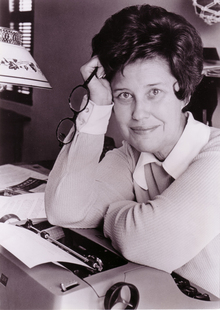
File:Erma Bombeck.jpg

by Erma Bombeck


On the TV the other day, a leading child psychologist said parents should treat their children as they would treat their best friend...with courtesy, dignity and diplomacy.

"I have never treated my children any other way," I told myself. But later that night, I thought about it. Did I really talk to my best friends like I talked to my children? Just suppose...our good friends, Fred and Eleanor, came to dinner one night and...

"Well it's about time you two got here! What have you been doing? Dawdling? Leave those shoes outside, Fred. They've got mud on them. And shut the door. Where were you born in a barn?"

"So Eleanor, how have you been? I've been meaning to have you over for such a long time. Fred! Take it easy on the chip dip of you'll ruin your dinner. I didn't work over a hot stove all day long to have you nibble like some bird."

"Hear from any of the gang lately? Got a card from the Martins. Yes, they're in Lauderdale again. They go every year to the same spot. What's the matter with you, Fred? You're fidgeting. Of course you have to go. It's down the hall, first door on the left. And I don't want to see the towel in the middle of the floor when you're finished."

"Did you wash your face before you came, Eleanor? I see a dark spot around your mouth. I guess it's a shadow. So how're your children? If you ask me I don't think summer school is great for them. Is everybody hungry? Then, why don't we go in to dinner? You all wash up and I'll take up the food. Don't tell me your hands are clean, Eleanor. I saw you playing with the dog."

"Fred, you sit over there and Eleanor you can sit with the half glass of milk. You know you're all elbows when it comes to milk. There now, your host will say grace."

"Fred, I don't see any cauliflower on your plate. Have you ever tried it? Well, try a spoonful. If you don't like it I won't make you finish it, but if you don't try it, you can just forget dessert. And sit up straight or your spine will grow that way. Now, what were we talking about? Oh yes, the Gerbers. They sold their house. I mean they took a beating, but Eleanor..., don't talk with food in your mouth. i can't understand a work you're saying. And use your napkin."

At that moment in my fantasy, my son walked into the room. "How nice of you to come," I said pleasantly.

"Now what did I do," he signed.

Jul 11, 2012

How to Get Your Kids to Do Their Chores

(...Without Nagging Them!)


Let us first remind ourselves of the old, straight-forward theory which tells us that generally, people don't like to be "told what to do". This absolutely includes kids. It's no wonder that kids need to constantly be reminded of what they were supposed to do - they don't want to be doing it in the first place! But with some guidance from the Gordon Model and bit of psychological insight, we think we can help.

In most households, here's how chores are usually delegated:
Mom: "I need you to wash the dishes, clean up your room, feed the dog and take him for a walk."
Child: "I don't feel like it."
Mom: "Do it!"
Child: "Fine."
There's one way to get a child to "agree" to do something! His willingness is lacking and his compliance is artificial. The mother will likely need to remind him: "You said you would do the chores I asked! Why aren't they done? Do them now - I won't ask you again." Adding a tinge of threat here might get your child to do what he's told (for the time being, at least*) but will likely entice him to resist even more. Not only are you telling him what to do without any reason or consideration of what he is needing to do, but your reminding/nagging him comes across as condescending; as if he isn't intelligent enough to remember. This holds true for nagging in all shapes and forms.

Now let's consider two important Gordon Model skills to help in this situation:

  1. The Preventive I-Message: These types of I-Messages are useful in preventing problems from occurring in the first place. They give the listener (the child, in this case) important information that they will need to know for the future. For example, you are having guests over for dinner and you would like your child to have his toys picked up off the floor before a certain time of day. Remember that the I-Message must have all three parts to increase the probability that it will be effective. Using this example, here is an I-Message that could be used: "I need to have the toys off the floor by 5 pm when the neighbors will be arriving, so that I don't feel embarrassed about inviting guests into a messy home and don't have to take up extra time that I will need to finish preparing dinner."
  2. Method III: The No-Lose Method to resolving conflicts is the perfect skill to use when it comes to chore-setting. Many things are in play here. First off, is the principle of participation, which says that a person is more motivated to carry out a decision that he has been a part of making, versus a decision that has been made on his behalf, without his consent. Secondly, Method III considers the needs of everyone involved. It could still, for example, allow the kids to watch their favorite show at the same time every night, while also lessening the burden of all the household duties on just Mom or Dad. Method III must be carried out in all six parts in order to be the most effective. More on Method III - including the numerous positive side effects - can be found in Chapter 11 of the P.E.T. book.
Parents must also remember that none of these are guaranteed quick-fixes for the conflicts in your family. But with time, practice, and a constant consideration for the needs of others, the benefits of using the Gordon Model skills are truly astonishing.

Try it for yourself and let us know how it worked for you. Feel free to always comment below or on our Facebook page.


* See Chapter 10 of the P.E.T. book to read the effects of parental power on Children

Jun 28, 2012

How to Deal When Your Children Are Violent


Violent tantrums: even the term is cringe-worthy. These mortifying experiences are commonly misunderstood by parents. More common still, is knowing the best way to handle these situations. Whether you're dealing with this in your family right now or think you have the best solution to cure these screaming, slapping and crying little people, consider the following:

First and foremost, parents should re-set their frame of mind. Remember that all behaviors (for children and adults alike) are attempts to fulfill a certain need. For example, your two-year-old runs away from the tub everyday at bathtime. What his behavior is saying = "I do NOT want to do that!" With a bit of Active Listening (verbal and non-verbal), you might find out why he is resistant to taking baths. Maybe he knows that right after bathtime is bedtime, and so he's trying to delay. Maybe you run the bath water too hot. A child this young might not have any way of verbalizing this to you and may not even realize that taking a bath can happen any time of day, or that the bath water can, in fact, be ran at a cooler temperature. When your children show you strong resistance, they are showing you that they're experiencing a problem.

Active Listening is the number one tool in finding out what's going on behind their behavior, which often asks as a masking agent. If your child is upset, it's not the time to cut them off and tell them to "put a cork in it." While you can explain (as a consultant) the effect that certain violent behaviors have on those around them, commanding them to stop will not solve their issue. Problems handled in this way lead to repetitive and often more passionate outburtsts. Children, like adults, want to be listened to and want their feelings to be considered. After Active Listening, sometimes the tantrum will stop right there. But other times it won't...

Particularly in families where the child's needs are rarely considered, if ever, a change in the child's behavior from tantrums to peacefulness will take some time to appear. Active Listening isn't usually an overnight fix. It takes time for the child to get used to the fact that you are actually listening to their needs and considering their feelings. In parent-child relationships which have been power based and the child usually "loses" the battle, trust will need to be rebuilt in order to have a solid foundation for Active Listening to be effective.

With time, skill, and some patience, these outlashes will begin to subside. By showing your children that you aren't going to simply "make them do something because you said so", you are also teaching your children an extremely important lesson in how to deal with conflicts. Raising children in this way will provide our society with the kind of adults who handle the needs and feelings of others in a respectable and effective manner.

For much more on this, check out the Parent Effectiveness Training book or learn about P.E.T. classes near you!

What do you think? Let us know!


Jun 7, 2012

Do Schools Deny Your Children of Their Civil Rights?

Excerpted from the Chapter "The Other Parents of Your Children" in the Parent Effectiveness Training book, by Dr. Thomas Gordon:

      In most schools, students are blatantly denied civil rights - the right of free speech, the right to wear their hair as they prefer, the right to wear the clothes they like, the right to dissent. Schools also deny children the right to refuse to testify against themselves, and if kids get into trouble, administrators seldom follow the customary procedures of "due process of law" guaranteed to citizens by the judicial system
     Is this a distorted picture of schools? I think not. Many other observers of the school system are seeing the same deficiencies. Furthermore, one need only ask youngsters how they feel about schools and schoolteachers. Many kids say they hate school and that their teachers treat them disrespectfully and unfairly. Most kids come to esperience school as a place where they must go; they experience learning as something that is seldom pleasant or fun; they experience studying as tedious work; and they see their teachers as unfriendly police officers. 
     When children are assigned to adults whose treatment of them producessuch negative reactions, parents cannot be expected to shoulder all the blame for the way their kids turn out. Parents can be blames, yes, but other adults must share the blame.

 How closely do you think this relates to your child's school or learning environment? Let us know your thoughts. Please feel free to comment here or on our Facebook page.

Mar 21, 2012

Submit Your Parenting Questions to P.E.T.

Happy Spring and Hello to all,

We've shared many stories of "others" here - now's the time to talk about Y-O-U. (Don't worry - we will keep you anonymous if you'd like!)

For the next several weeks, GTI would like to offer this blog as a platform for you to send us your parenting questions, concerns or any issue that you're "stumped" on how to deal with.

All questions can be submitted in the comment box below and your name can be left anonymous if you prefer. We've changed the settings here so that you don't have to sign in anywhere in order to comment.

Just remember - if you do choose to ask us a question anonymously, you will have to come back and check to see if your question was answered. And to receive your book and sticker, send us an email with your shipping info to family@gordontraining.com

Questions will be answered once per week, and those whose questions are used here will receive a free P.E.T. book and this bumper sticker:


Tune in next week with the first Q&A post and giveaway!


Jan 18, 2012

How To Know If P.E.T. Is Right For You?

So you've decided that you want to learn more about being a "better" parent. After all, it is widely considered to be the most important job you can ever take on. While that's true, you might also be realizing that you have no experience, skill or education on how to effectively raise a responsible and happy child. The stuff that you're trying now just isn't working and you feel terrible every time you yell at your kids. The future generation is in YOUR hands! Now what?

Well first of all, kudos to you for taking the first step in seeking knowledge about how to manage important duty.

You might ask yourself a few questions like:

  • Does punishment really work? 
  • Is compromise necessary? 
  • Should parents hold the power?
  • Are there other skills out there that you've never even heard of?

Since we know that you won't just go out and purchase the first parenting book that you come across (promise us you won't do that!), we've broken down and eight of the most common parent training programs out there and compared them with our Parent Effectiveness Training (P.E.T.)

In the article, you will find P.E.T. compared with:

  1. Parent Effectiveness Training (P.E.T.)
  2. Nonviolent Communication (N.V.C.)
  3. How to Talk so Kids Will Listen and Listen so Kids Will Talk
  4. Systematic Training for Effective Parenting (S.T.E.P.)
  5. Active Parenting
  6. Love and Logic
  7. Triple P (Positive Parenting Program)
  8. Dare to Discipline

To read the comparison, click here to find the article: Parenting Program Comparison

Comment below, let us know what you think!

Oct 13, 2011

Recent Feedback from Parents

With an recent increase in P.E.T. feedback in the last two weeks, we thought we would share some of it with you:

As a father of a 13 year old boy and 2 twins 28 months ( Boy and Girl ) I just finished reading the book and was very inspired. I've already tried the technique with my oldest and I already see some progress. I look forward to the classes.
- P.E.T. Book Reader

I wanted you to know that the P.E.T. program is the best parenting information I've ever encountered, and as the mother of a teenager I've read a LOT of books. Dr. Gordon's program is exactly what I needed. Funny thing is, I actually thought I was a pretty well-educated parent, so I was baffled about why things weren't going more smoothly with my child. Now, finally, I know what I was doing that wasn't working well. Thanks again for your help, and all the best.
- P.E.T. Book Reader


She tried Active Listening and witnessed for the first time in her relationship with her son, him open up and express his feeling and see his emotional temperature drop. She said she couldn't believe her eyes! She was very excited!

Mar 9, 2010

Is Active Listening & I Messages Required with the No-lose Method?

The Need for Active Listening and I-Messages

Because the no-lose method requires the involved parties to join together in problem-solving, effective communication is a prerequisite. Consequently, parents must do a great deal of Active Listening, and must send clear I-Messages. Parents who have not learned these skills seldom have success with the no-lose method.

Active Listening if required, first, because parents need to understand the feelings or needs of the kids. What do they want? Why do they persist in wanting to do something even after they know it s not acceptable to their parents? What needs are causing them to behave in a certain way?

Why is Bonnie resisting going to nursery school? Why does Jane not want to wear the "ugly" coat? Why does Nathan cry and fight his mother when she drops him off at the baby-sitter's? What are my daughter's needs that make it so important for her to go to the beach during the Easter vacation?

Active Listening is a potent tool for helping a youngster to open up and reveal his real needs and true feelings. When these become understood by the parent, it is often an easy next step to think of another way of meeting those needs that will not involved behavior unacceptable to the parent.

Since strong feelings may come out during problem-solving--from parents as well as youngsters, Active Listening is critically important in helping to release feelings and dissipate them, so that effective problem-solving can continue.

Finally, Active Listening is an important way to let kids know that their proposed solutions are understood and accepted as proposals made in good faith; and that their thoughts and evaluations concerning all proposed solutions are wanted and accepted.

I-Messages are critical in the no-lose method process so kids will know how the parent feels, without impugning the character of the child or putting him down with blame and shame. You-Messages in conflict-resolution usually provoke counter You-Messages and cause the discussion to degenerate into a nonproductive verbal battle with the contestants vying to see who can best clobber the other with insults.

I-Messages also must be used to let kids know that parents have needs and are serious about seeing that those needs are not going to be ignored just because the youngster has his needs. I-Messages communicate the parent's own limits--what he cannot tolerate and what he does not want to sacrifice. I-Messages convey, "I am a person with needs and feelings," "I have a right to enjoy life," "I have rights in our home."*

*Excerpt from Dr. Thomas Gordon's P.E.T. book

Mar 2, 2010

Should Punishment Be Built into the Decision?

Parents have reported that they (or the kids) found themselves, after a no-lose decision had been reached, building into the agreement the penalties or punishments to be administered if the kids did not keep to their agreement.

My earlier reaction to these reports was to suggest that mutually set penalties and punishments might be all right, if they also applied to the parents, should they not uphold their end of the bargain. I now think differently about this issue.

It is far better for parents to avoid bringing up penalties or punishments for failure to stick to an agreement or carry out a Method III decision. In the first place, parents will want to communicate to the youngsters that punishment is not to be used at all any more, even if it is suggested by the kids, as if often will be. Secondly, more is gained by an attitude of trust--trust in the kids' good intentions and integrity. Youngsters tell us, "When I feel trusted, I'm less likely to betray that trust. But when I feel my parent or a teacher is not trusting me, I might as well go ahead and do what they already think I've done. I'm already bad in their opinion. I've already lost, so why not go and do it anyway."

In the no-lose method, parents should simply assume that the kids will carry out the decision. That is part of the new method--trust in each other, trust in keeping to commitments, sticking to promises, holding up one's end of the bargain. Any talk about penalties and punishments is bound to communicate distrust, doubt, suspicion, pessimism. This is not to say that kids will always stick to their agreement. They won't. It says merely that parents should assume that they will. "Innocent until proven guilty" or "responsible until proven irresponsible" is the philosophy we recommend.*

*Excerpt from Dr. Thomas Gordon's P.E.T. book